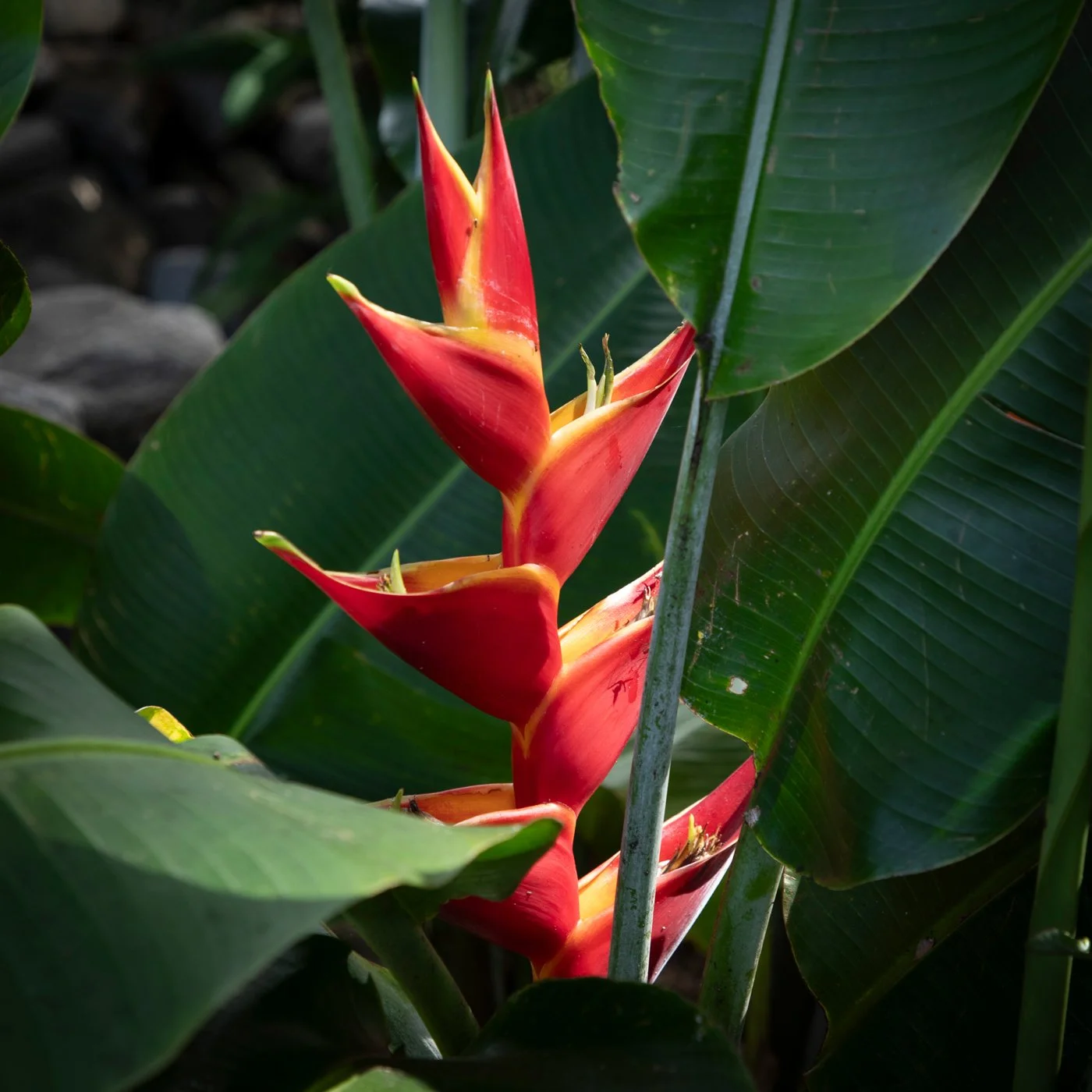
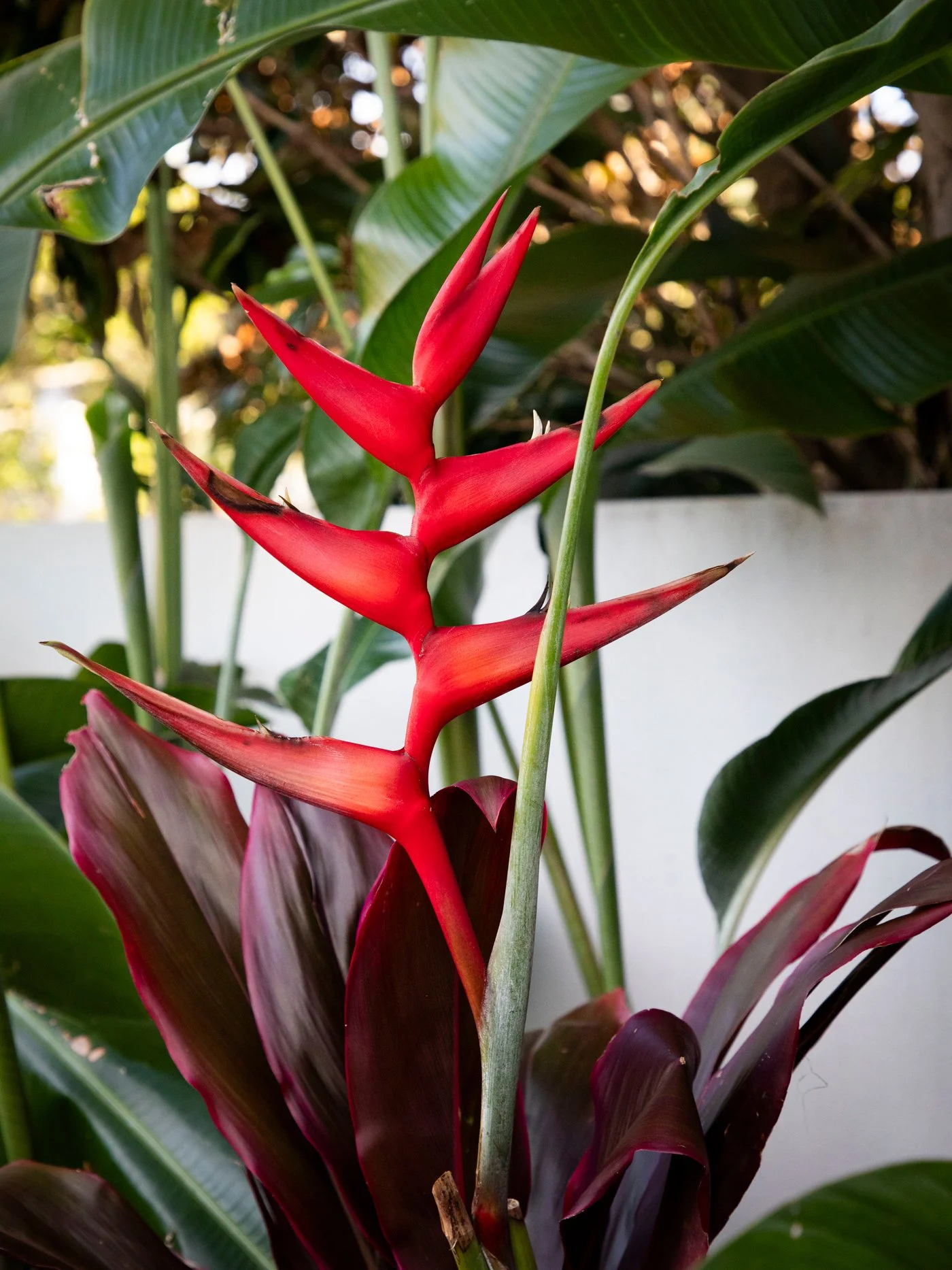
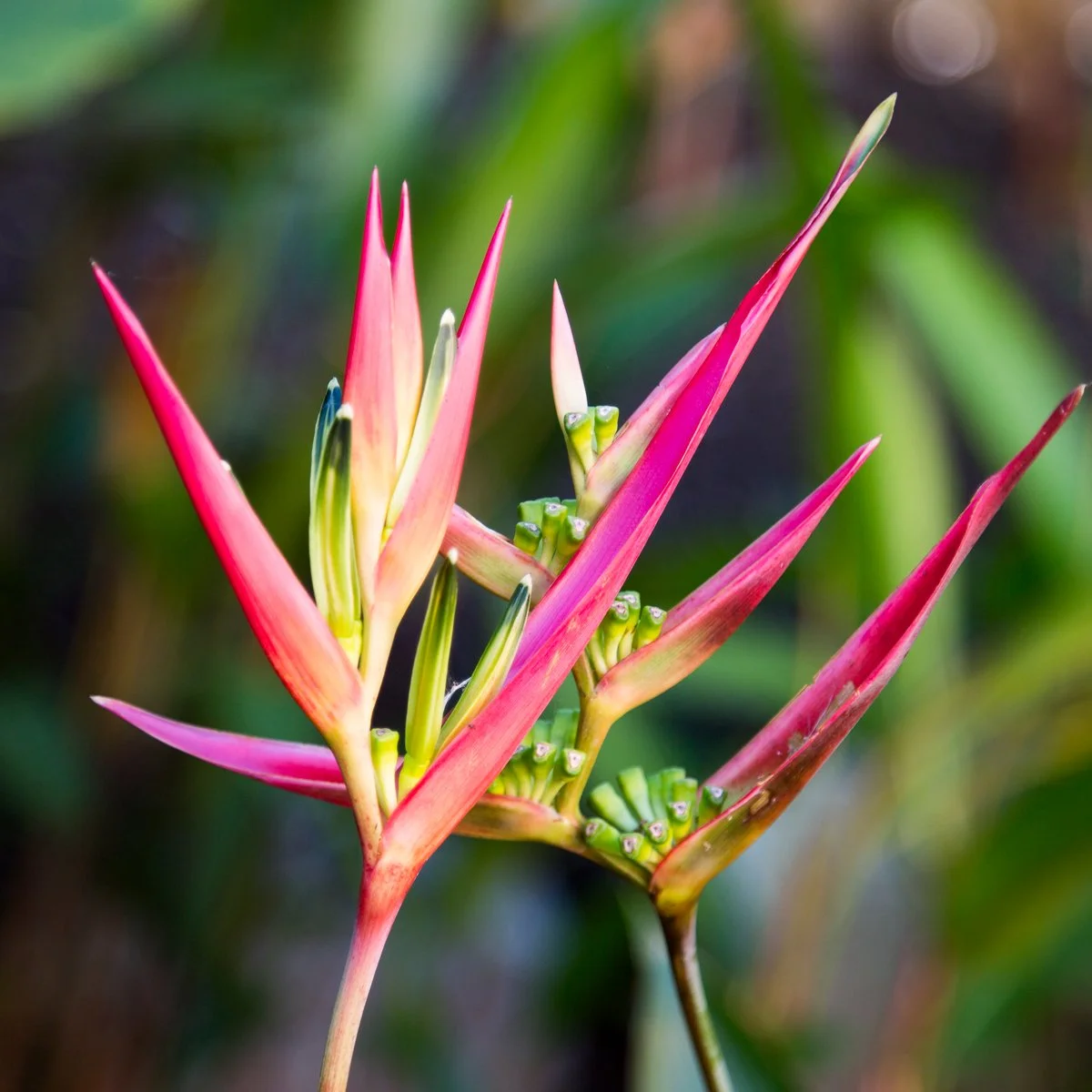
Heliconia
A bold, tropical feature plant with vibrant, architectural flowers
Heliconias bring instant impact to any subtropical garden. With their striking upright bracts, lush foliage, and strong vertical form, they create a dramatic, resort‑style look. In SEQ’s warm, humid climate, they thrive beautifully and reward you with long‑lasting colour throughout the warmer months.
🧬 Botanical Name
Heliconia spp. (various cultivars)
🪴 Common Names
Lobster Claw, False Bird of Paradise
📏 Size
Height: 1–3 m depending on variety
Width: 1–2 m
Upright, clumping, and fast‑growing
☀️ Light Requirements
Outdoors (SEQ): Full sun to part shade
Best flowering in full sun
Tolerates part shade but may produce fewer blooms
🌱 Soil Needs
Rich, free‑draining soil
Loves organic matter
Ideal blend: premium garden soil + compost + mulch
Prefers consistently moist conditions
💧 Watering
Keep soil evenly moist, especially in warm months
Allow the top few centimetres to dry slightly between waterings
Mulch well to retain moisture
Signs of underwatering: curling or browning leaf edges Signs of overwatering: yellowing leaves, soft stems
🌿 Growth Habit
Upright, clumping perennial
Produces bold, colourful bracts through spring–autumn
Lush, banana‑like foliage adds strong tropical structure
✂️ Maintenance Level
Low to moderate
Remove spent flower bracts
Cut old stems back to the base after flowering
Feed every 4–6 weeks in spring and summer with a balanced fertiliser
🌤️ Seasonal Performance (SEQ)
Thrives in warm, humid conditions
Best flowering from late spring to early autumn
Protect from cold snaps below 10°C
May die back slightly in winter but rebounds strongly in spring
⭐ Special Care Notes
Loves warmth and moisture
Mulch generously to keep roots cool
Plant in a sheltered spot to protect large leaves from wind
Divide clumps every few years to maintain vigour
🏡 Where It Works Best
Tropical garden beds
Poolside planting
Feature plant in sunny courtyards
Backdrop planting for layered tropical gardens
🚫 Common Mistakes to Avoid
Too much shade → reduced flowering
Dry soil → browning leaves and poor growth
Heavy, waterlogged soil → root rot
Exposed windy positions → torn foliage