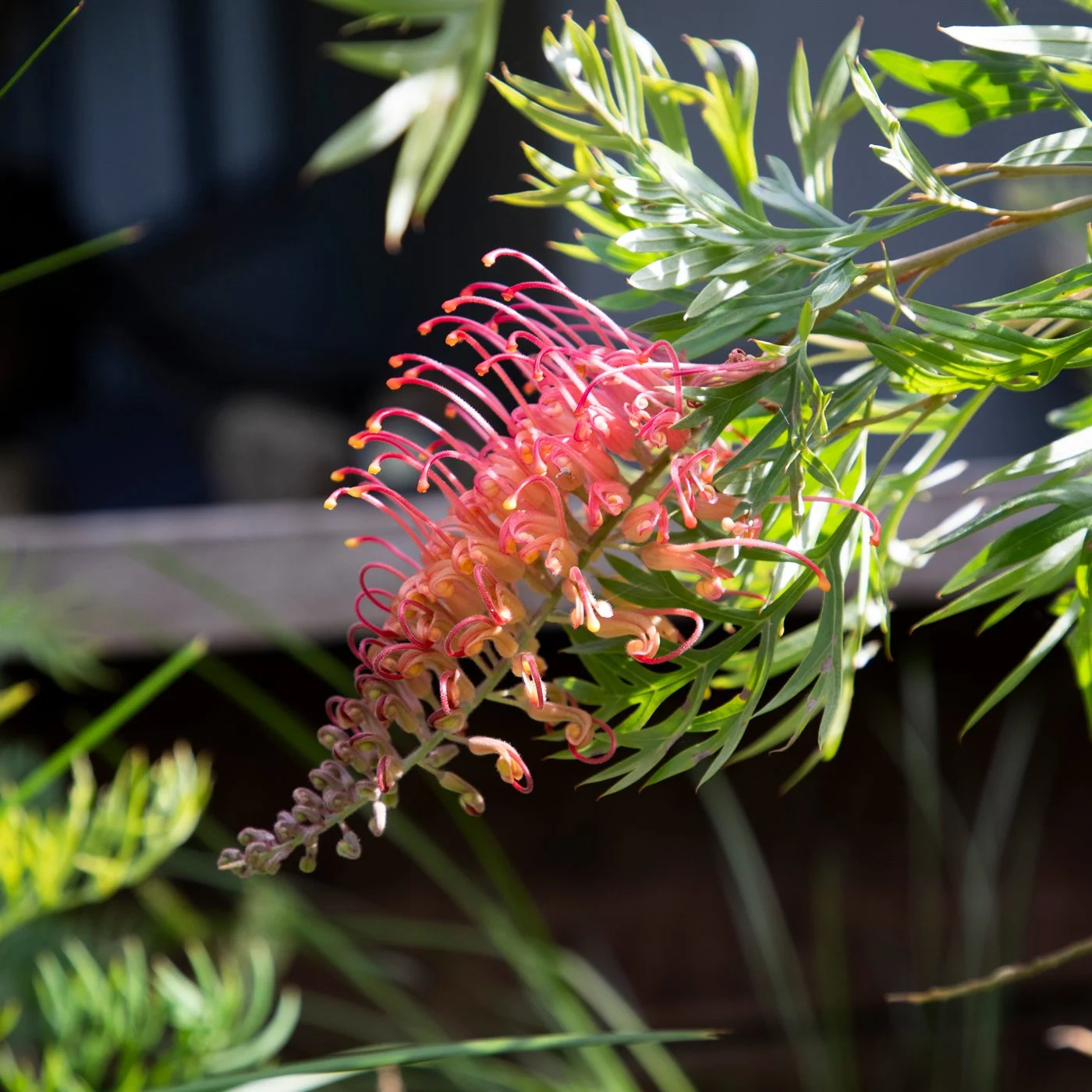
Grevillea
A hardy, bird‑attracting native with fine foliage and vibrant blooms
Grevilleas are iconic Australian natives known for their striking spider‑like flowers, soft needle or fern‑like foliage, and exceptional toughness. They bring colour, movement, and wildlife into the garden, thriving beautifully in SEQ’s warm climate. With year‑round interest and low maintenance needs, they’re ideal for native, coastal, and contemporary landscapes.
🧬 Botanical Name
Grevillea spp. (various species and cultivars)
🪴 Common Names
Grevillea, Spider Flower
📏 Size
(Varies by cultivar — general range)
Height: 50 cm – 4 m
Width: 50 cm – 3 m
Forms range from compact shrubs to small trees
☀️ Light Requirements
Outdoors (SEQ): Full sun to part shade
Best flowering in full sun
Tolerates coastal exposure and reflected heat
🌱 Soil Needs
Free‑draining soil is essential
Prefers sandy or loamy soils
Avoid heavy, waterlogged clay
Benefits from organic matter — but keep phosphorus low
💧 Watering
Water regularly during establishment
Once established, highly drought‑tolerant
Water occasionally in extended dry periods
Signs of underwatering: sparse flowering, leaf curl Signs of overwatering: yellowing leaves, root stress
🌿 Growth Habit
Fine, soft foliage (needle‑like or fern‑like depending on cultivar)
Spider‑shaped flowers in red, pink, orange, yellow, or cream
Flowers attract bees, butterflies, and nectar‑feeding birds
Many cultivars bloom for most of the year in SEQ
✂️ Maintenance Level
Low
Light prune after flowering to maintain shape
Avoid cutting into old wood
Feed with a native‑safe, low‑phosphorus fertiliser
🌤️ Seasonal Performance (SEQ)
Thrives in warm, sunny conditions
Flowers heavily in spring and autumn
Many cultivars flower year‑round
Handles heat, humidity, and coastal exposure well
⭐ Special Care Notes
Requires excellent drainage
Avoid high‑phosphorus fertilisers
Mulch lightly — keep mulch away from trunk
Ideal for wildlife gardens
🏡 Where It Works Best
Native and coastal gardens
Wildlife‑friendly landscapes
Feature shrub or screening hedge
Contemporary and drought‑tolerant designs
Mixed beds needing colour and texture
🚫 Common Mistakes to Avoid
Overwatering → root rot
Planting in heavy clay → poor performance
Using high‑phosphorus fertiliser → nutrient toxicity
Hard pruning into old wood → slow recovery