Mandevillea
A vibrant, climbing tropical with bold, continuous blooms
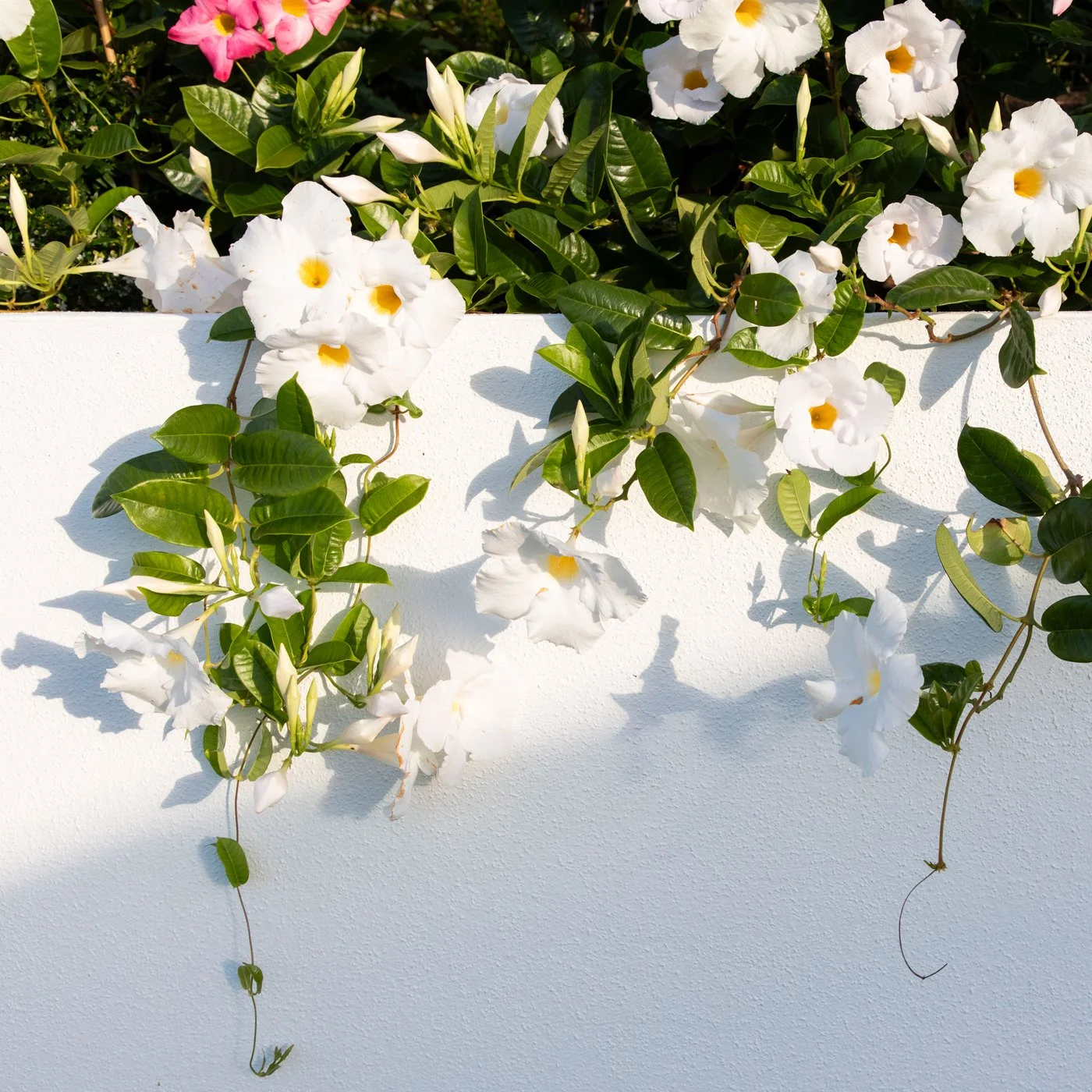
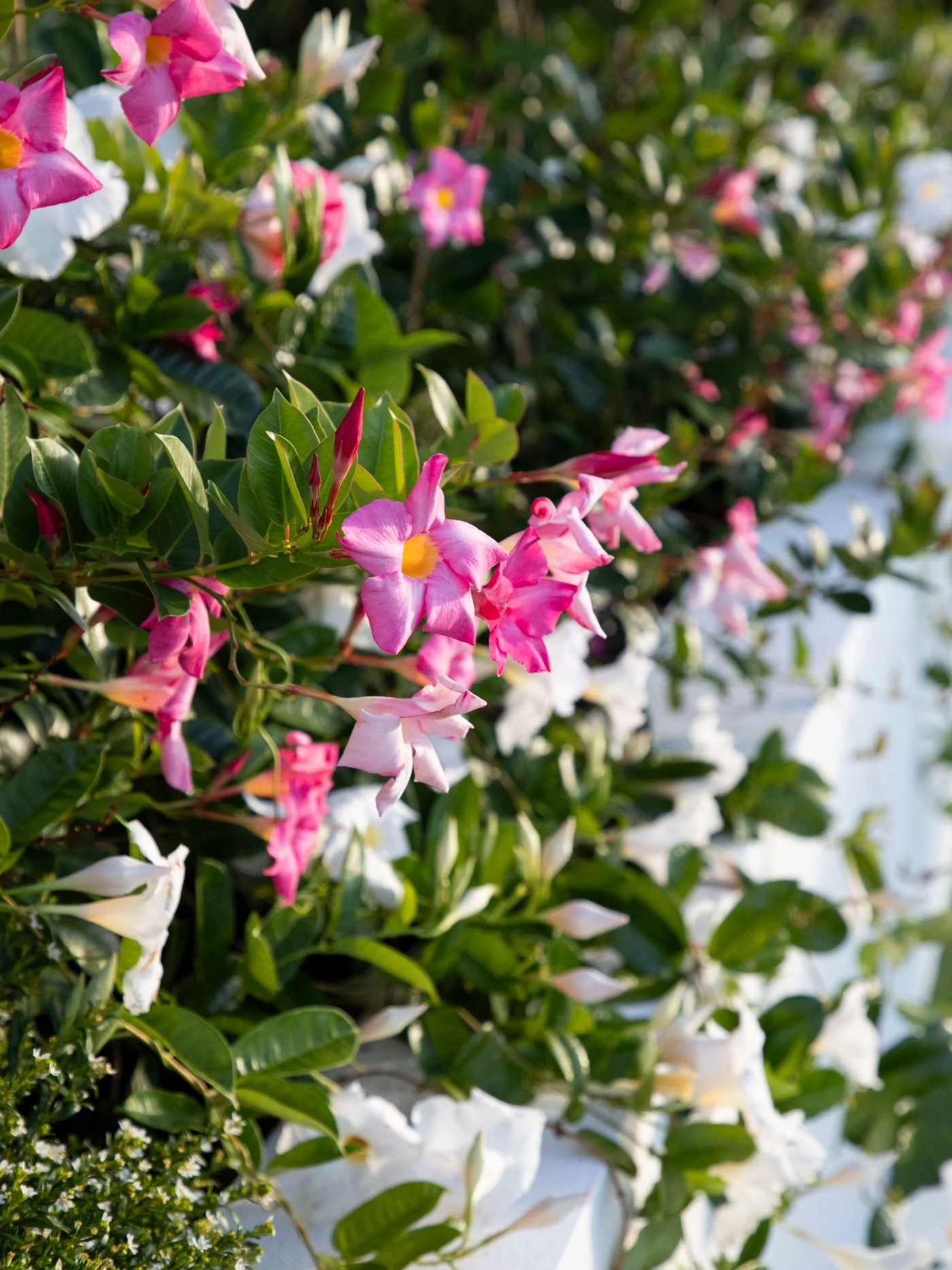
Mandevillea is a fast‑growing, flowering climber that brings instant colour and softness to any garden. With its glossy foliage and abundant trumpet‑shaped flowers, it’s perfect for adding height, coverage, and a lush tropical feel. In SEQ’s warm climate, it flowers for most of the year and thrives with very little fuss.
🧬 Botanical Name
Mandevilla spp.
🪴 Common Names
Mandevillea, Rock Trumpet, Dipladenia (closely related)
📏 Size
Height: 2–4 m with support
Width: 1–2 m
Vigorous climbing habit
☀️ Light Requirements
Outdoors (SEQ): Full sun to part shade
Best flowering in full sun
Tolerates part shade but may produce fewer blooms
🌱 Soil Needs
Free‑draining, fertile soil
Ideal blend: premium potting mix + compost + coarse sand
Avoid heavy, waterlogged soil
💧 Watering
Keep soil evenly moist during active growth
Allow the top few centimetres to dry slightly between waterings
Water more frequently in hot weather
Signs of underwatering: wilting or dropping buds Signs of overwatering: yellowing leaves, soft stems
🌿 Growth Habit
Fast‑growing climber
Twining stems that need support
Produces abundant trumpet‑shaped flowers in warm months
✂️ Maintenance Level
Low to moderate
Prune lightly after flowering to maintain shape
Remove spent blooms to encourage new ones
Feed every 4–6 weeks in spring and summer with a flowering fertiliser
🌤️ Seasonal Performance (SEQ)
Thrives in warm, sunny conditions
Flowers from spring through late autumn
May slow down slightly in winter but remains evergreen in SEQ
Protect from cold snaps below 8–10°C
⭐ Special Care Notes
Provide a trellis or support for climbing
Mulch well to retain moisture
Avoid harsh afternoon sun in very hot inland areas
Pinch tips when young to encourage bushier growth
🏡 Where It Works Best
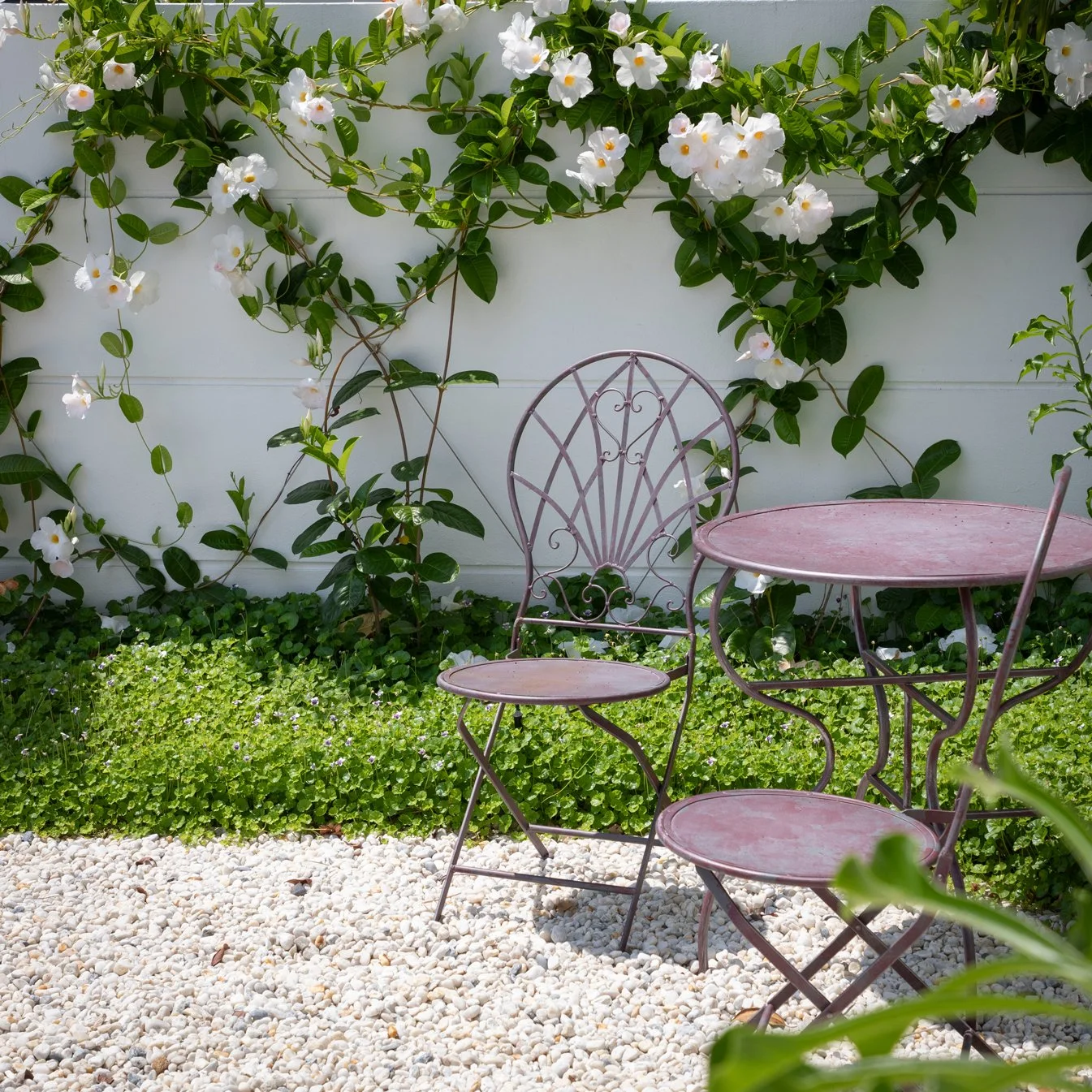
Trellises, arbours, and fences
Pots with climbing frames
Poolside planting
Tropical and Mediterranean‑style gardens
Covering vertical spaces with colour
🚫 Common Mistakes to Avoid
Too much shade → reduced flowering
Overwatering → root rot
No support → tangled, weak growth
Heavy pruning in winter → reduced spring blooms