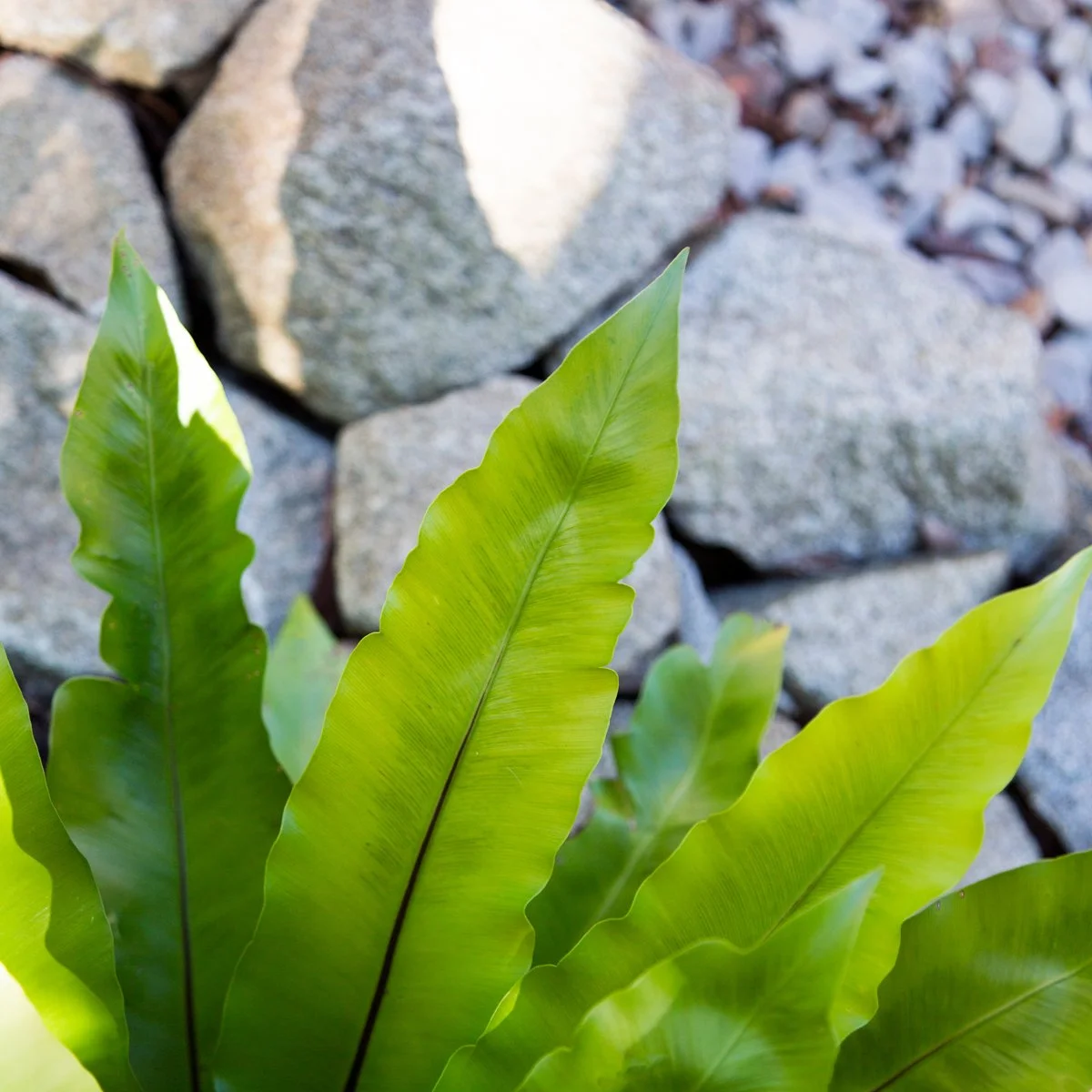
Asplenium ‘Bird’s Nest Fern’
A lush, architectural fern with broad, wavy fronds forming a striking vase‑shaped rosette
Bird’s Nest Fern is a classic subtropical understory plant prized for its bold, sculptural form and fresh green foliage. Thriving in the warm, humid conditions of SEQ, it brings softness and tropical character to shaded garden spaces and indoor plantings.
🧬 Botanical Name
Asplenium nidus
🪴 Common Names
Bird’s Nest Fern, Asplenium Fern
📏 Size
Height: 60–120 cm
Width: 60–120 cm
Forms a symmetrical rosette with arching, wavy fronds
☀️ Light Requirements
Prefers bright, filtered light to full shade
Avoid direct sun → can scorch fronds
Ideal for shaded garden beds, patios, and indoor spaces
🌱 Soil Needs
Moist, rich, well‑draining soil
Loves organic matter and consistent moisture
Avoid heavy, compacted soils
💧 Watering
Keep soil evenly moist but not waterlogged
Water into the soil, not the centre of the rosette
Increase watering during hot, dry periods
Underwatering signs: crisp or browning frond edges Overwatering signs: yellowing, soft or collapsing fronds
🌿 Growth Habit
Rosette‑forming fern with broad, glossy fronds
Fronds emerge from a central “nest”
Creates a lush, tropical focal poin
Slow to moderate growth depending on shade and humidity
✂️ Maintenance Level
Low
Remove damaged fronds at the base
Avoid disturbing the central growing point
Feed lightly in spring with a gentle, organic fertiliser
🌤️ Seasonal Performance (SEQ)
Evergreen year‑round
Thrives in humidity and warm temperatures
Protect from cold winds and winter dryness
⭐ Special Care Notes
Excellent for creating lush, tropical texture
Avoid overhead watering into the crown
Mulch well to maintain moisture
Performs beautifully in pots and sheltered garden beds
🏡 Where It Works Best
Shaded tropical gardens
Understory planting beneath palms and canopy trees
Courtyards and patios
Indoor feature plant in bright, indirect light
Fernery or rainforest‑style plantings
🚫 Common Mistakes to Avoid
Direct sun exposure → leaf burn
Watering into the centre → rot
Allowing soil to dry out completely
Using harsh fertilisers → frond damage